
We’ve arrived in Portomarin after a surprisingly difficult journey. My memories of the route from Sarria to Santiago de Compostela are that it was tiring (most notably extremely painful on the soft tissues of my feet) but relatively flat. Memories are clearly faulty creatures, the section once we had walked a km or two from Sarria, was particularly hard going. The remainder of the route rose up and dropped fairly steeply on numerous occasions. I hope the young Italian is coping ok – I’d assured him that Sarria to Santiago was a very easy, flat section, mea culpa.
Back to the journey.
Sarria isn’t a particularly pretty town, it has the general air of a place in transit, scruffy, a bit like a tatty bus station, somewhere people travel to and from. It’s the starting point for some 150,000 pilgrims a year with a further 50,000+ passing through having started earlier on the Frances, typically St Jean in France, Pamplona of running bull fame, Burgos and Leon all of which are far more interesting architecturally.

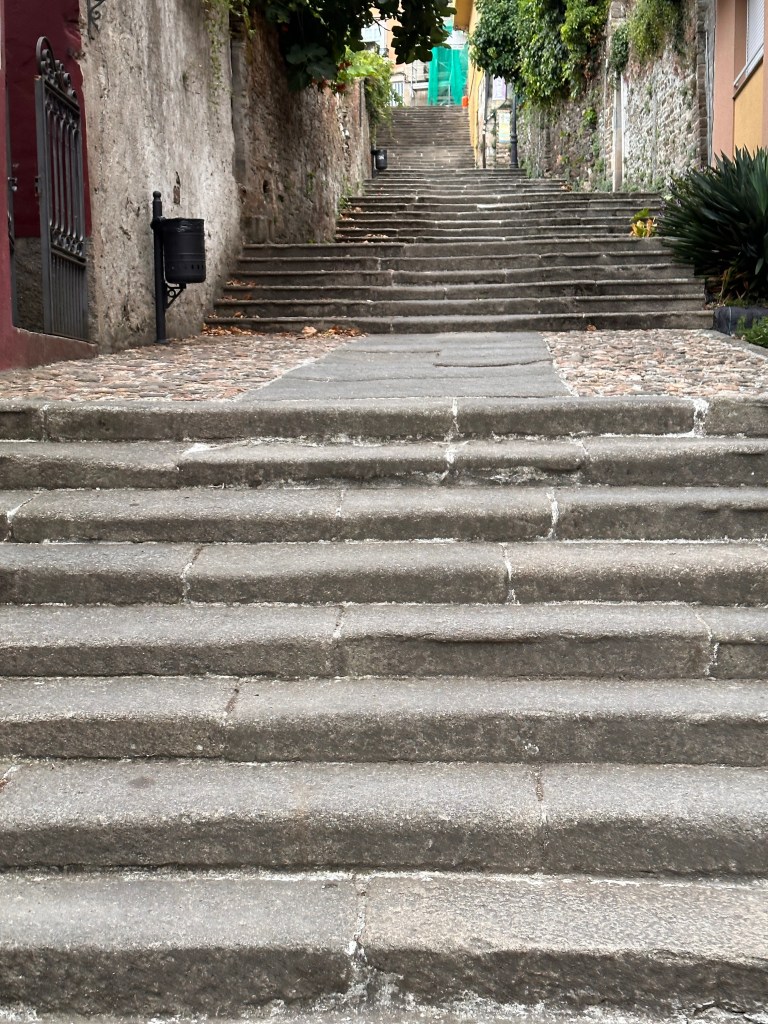
The route of the Camino forces you up these steps, now quite famous as the first bit of strenuous activity experience by those starting in Sarria and the first taste of the efforts to come.
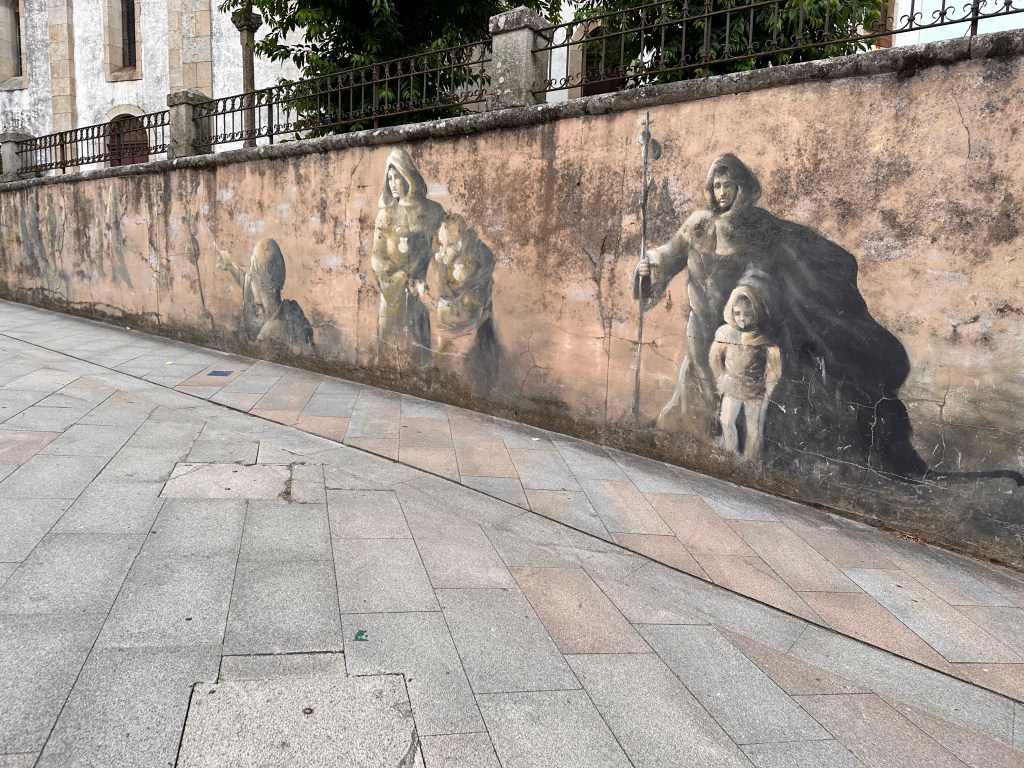
The Spanish love their murals which are often exhortative.
We started out around 7:30 and for the first 50m or so found ourself alone on the road. As we reached the steps we found people converging from all directions and for the rest of the journey we’ve essentially been in convoy, never more than 100 metres from another group. We’ve stopped on three or four occasions to find ourselves surrounded by peregrinos most of whom are carrying small packs (having previously arranged to have their main packs carried by taxis to their next lodging) and have clearly started in Sarria.
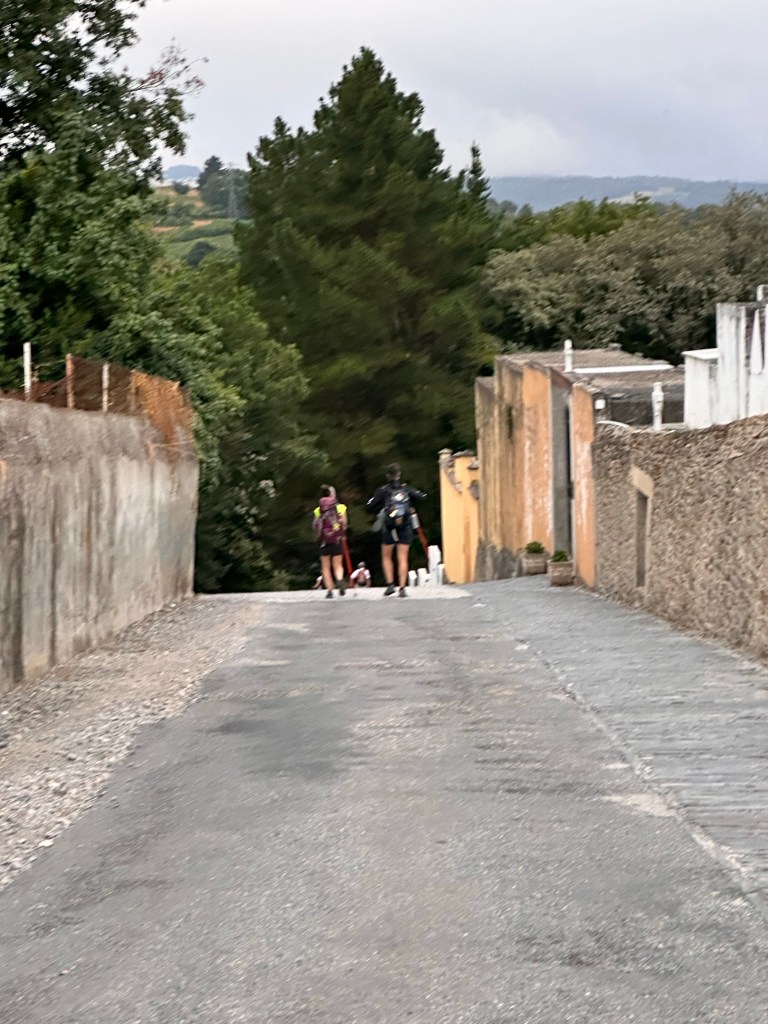
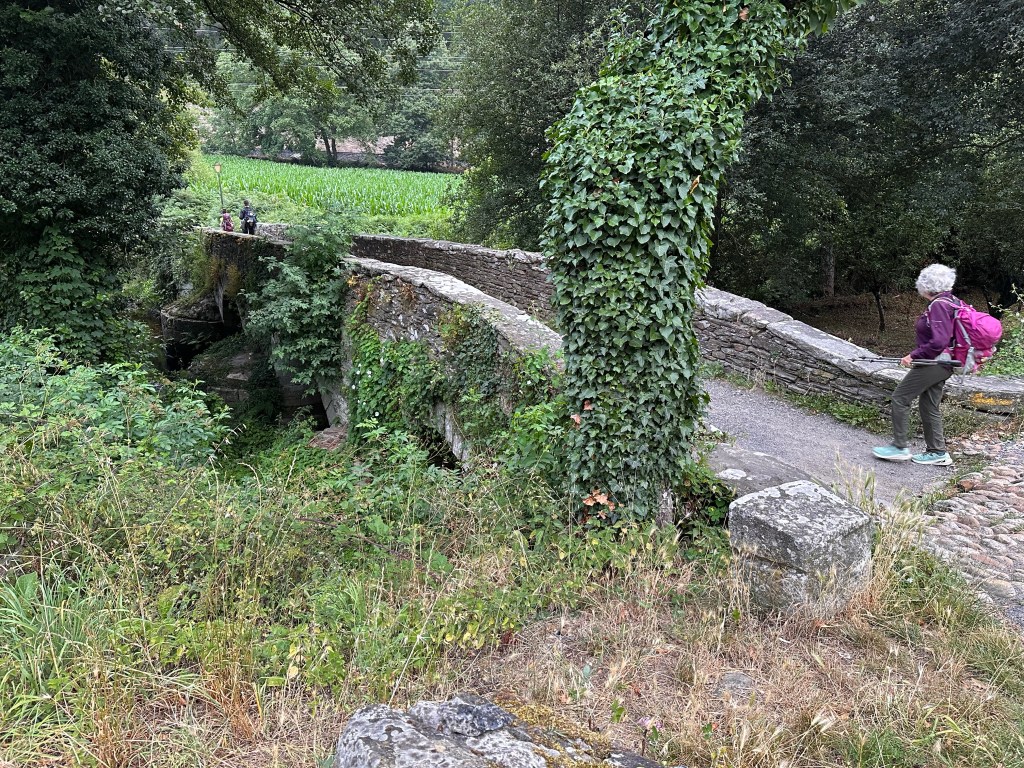

We did see this chap/lady in the distance.
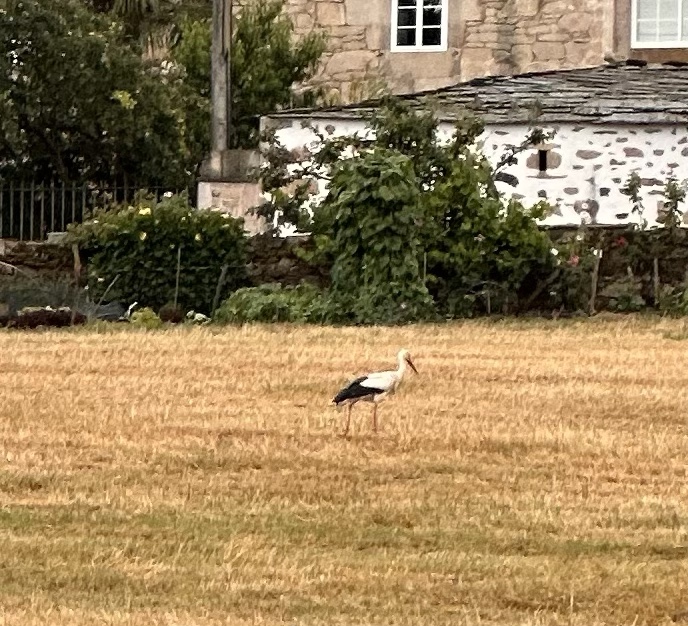
But halfway through our journey we came across what was clearly a stork flying school taking advantage of a thermal coming off the nearby fields.
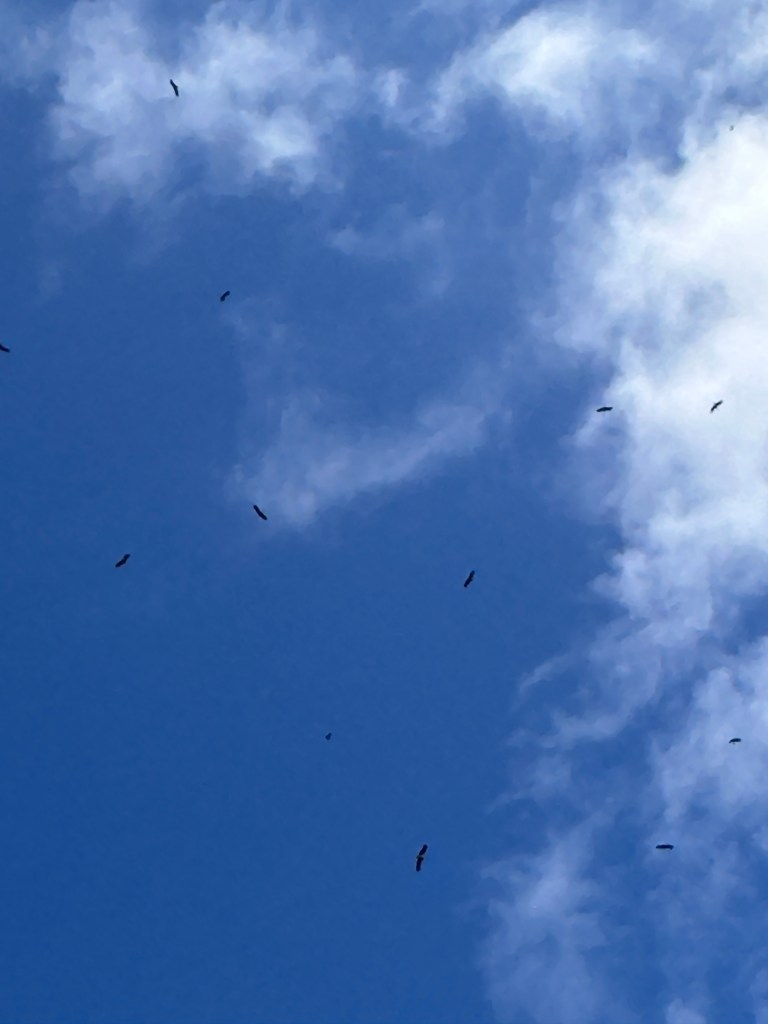
When we’ve travelled earlier in the year it’s been a delight to see storks nesting on the church towers and electricity pylons but it would seem that the young storks have mastered the art of flying and have deserted the nests. According to this article, https://www.abc.net.au/news/2022-07-27/storks-give-up-migrating-to-africa-to-live-on-landfill-in-spain/101266056, storks are now indigenous. They’re beautiful birds and perhaps we’ll see them back in the uk sometime soon. (https://www.nationalgeographic.co.uk/animals/2020/07/after-606-years-white-storks-are-nesting-in-britain-again). 🤞
Meanwhile, a plant we often see in the UK.
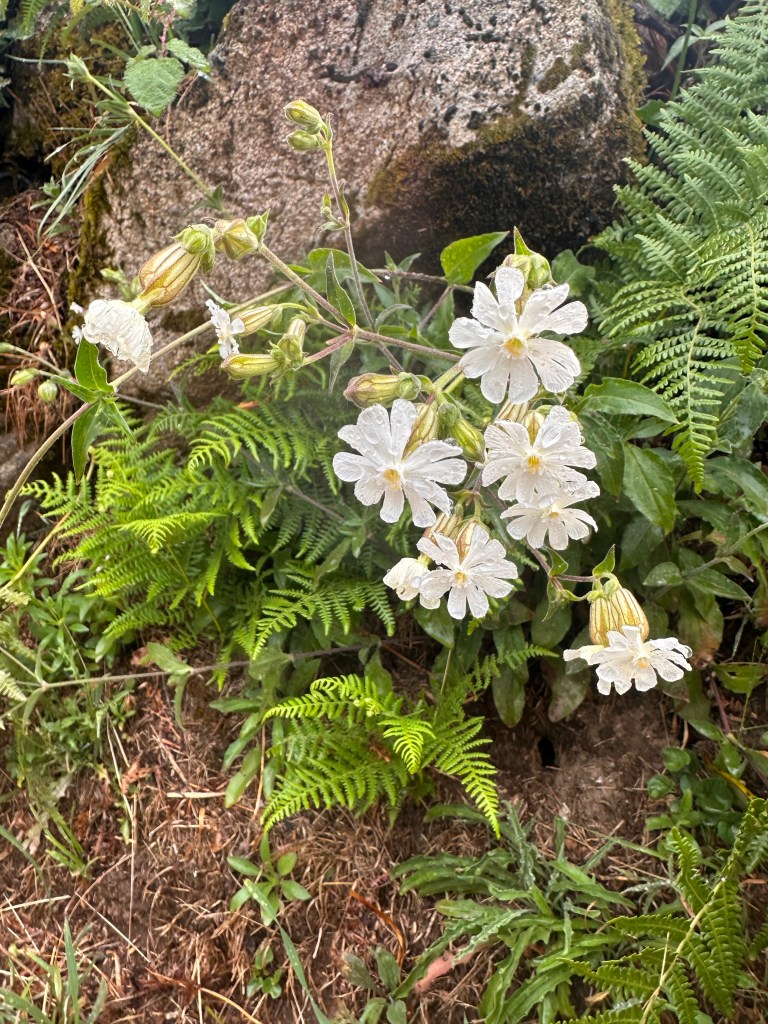
And one I’ve not seen at home but is common here.

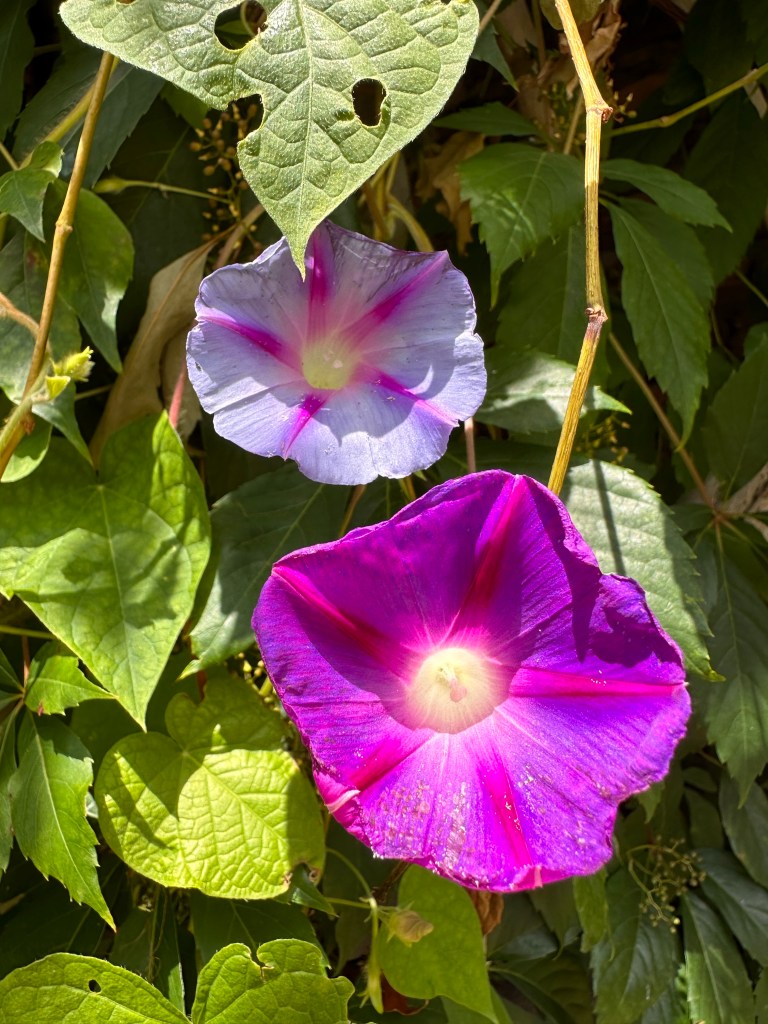
Also, not calla lilies but very similar
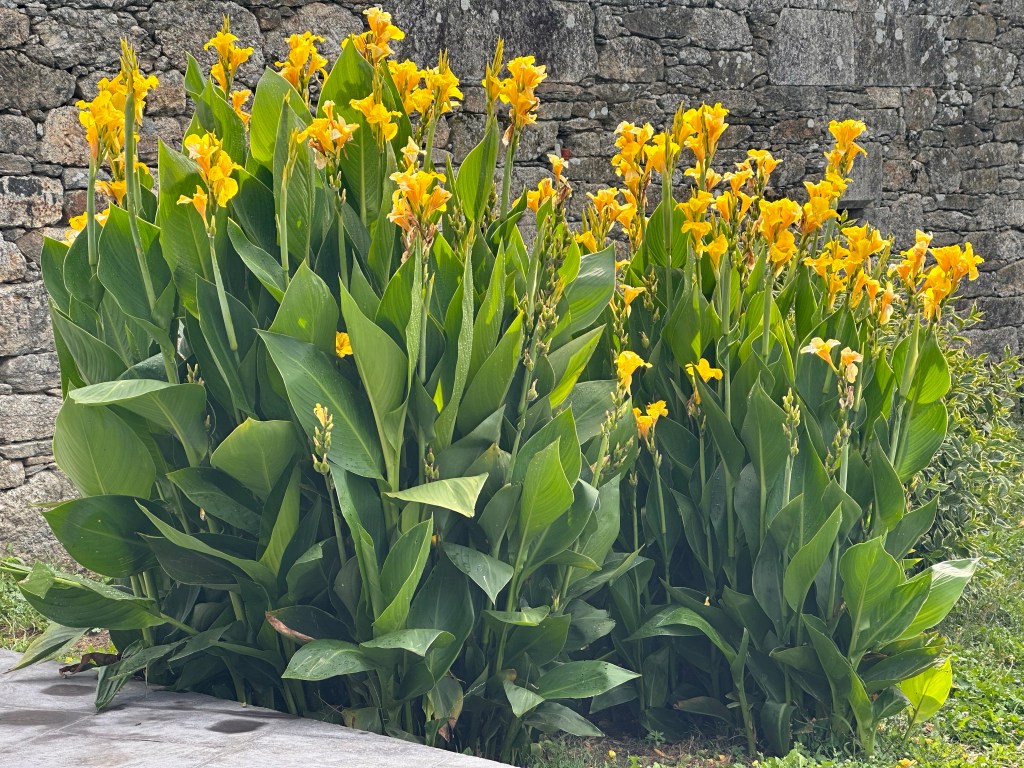
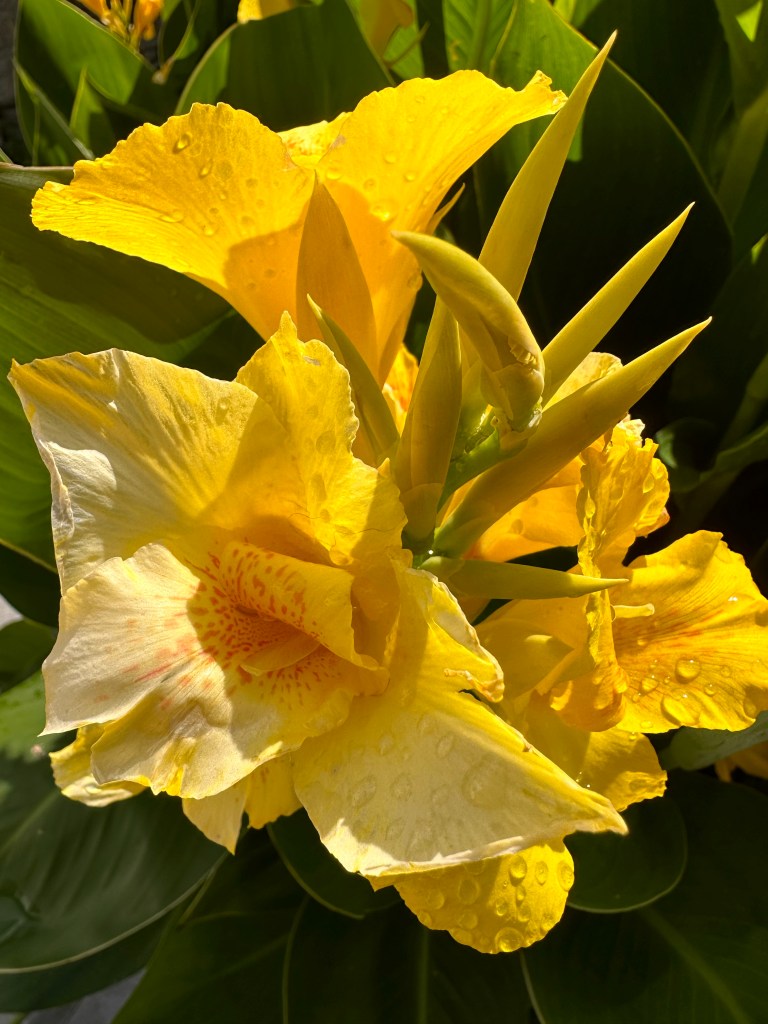
These beautiful yellow hawkweed flowers were ubiquitous in the hedgerows.

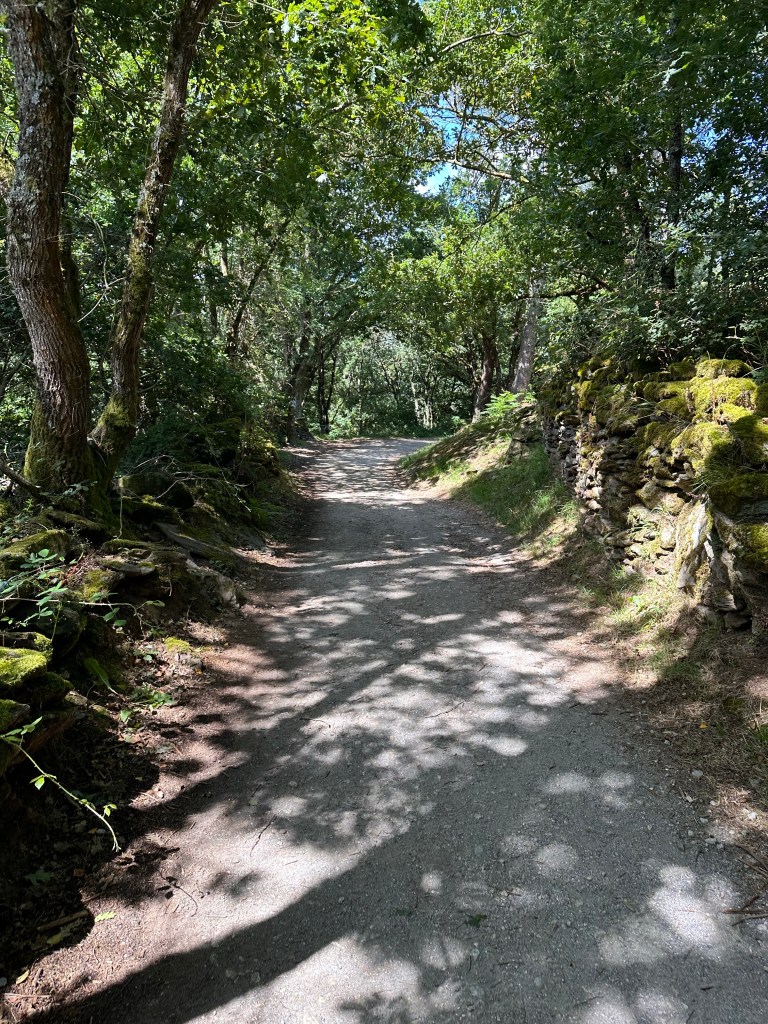
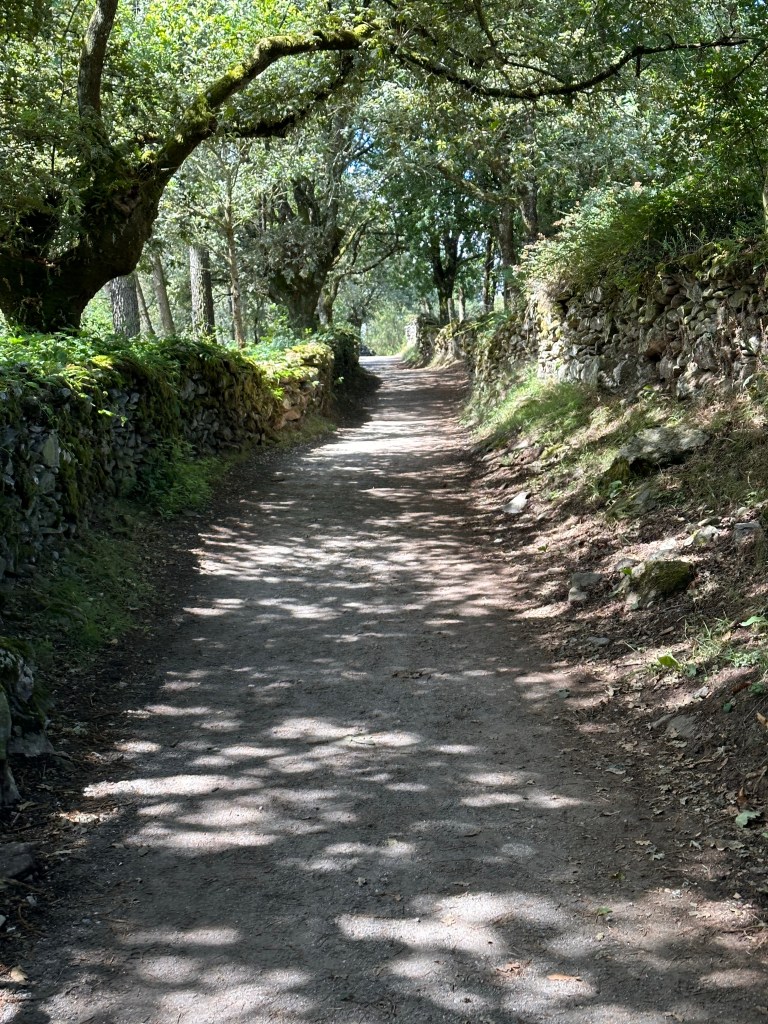
Much of the route was along lanes empty of traffic but we often found ourselves walking short stretches on small sun dappled forest paths.
It’s my birthday shortly and probably the best meal we’ve ever had on the Camino was in a small restaurant some 5km from Portomarin. Dorothy promised to buy me lunch and we arrived, hungry and eager but …
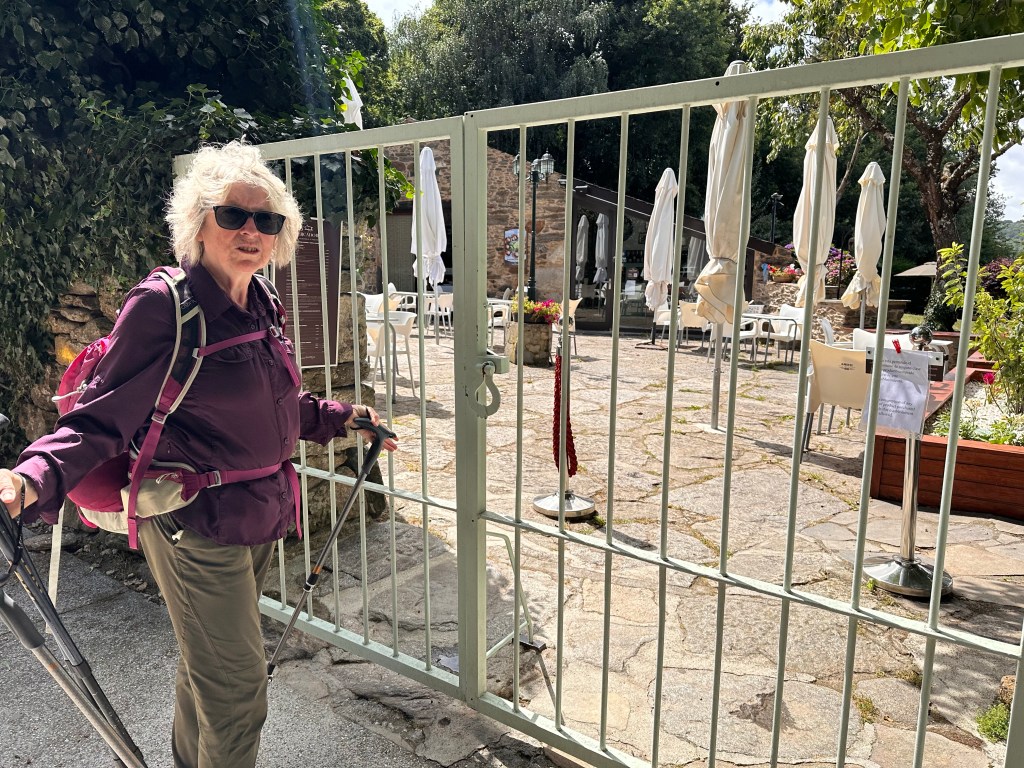
Downhearted and limping from a blister on my little toe we carried on to los andantes, a small bar which served a good mixed salad and quinoa burger which though no substitute satisfied the gnawing pains in my stomach but did little for my toe.
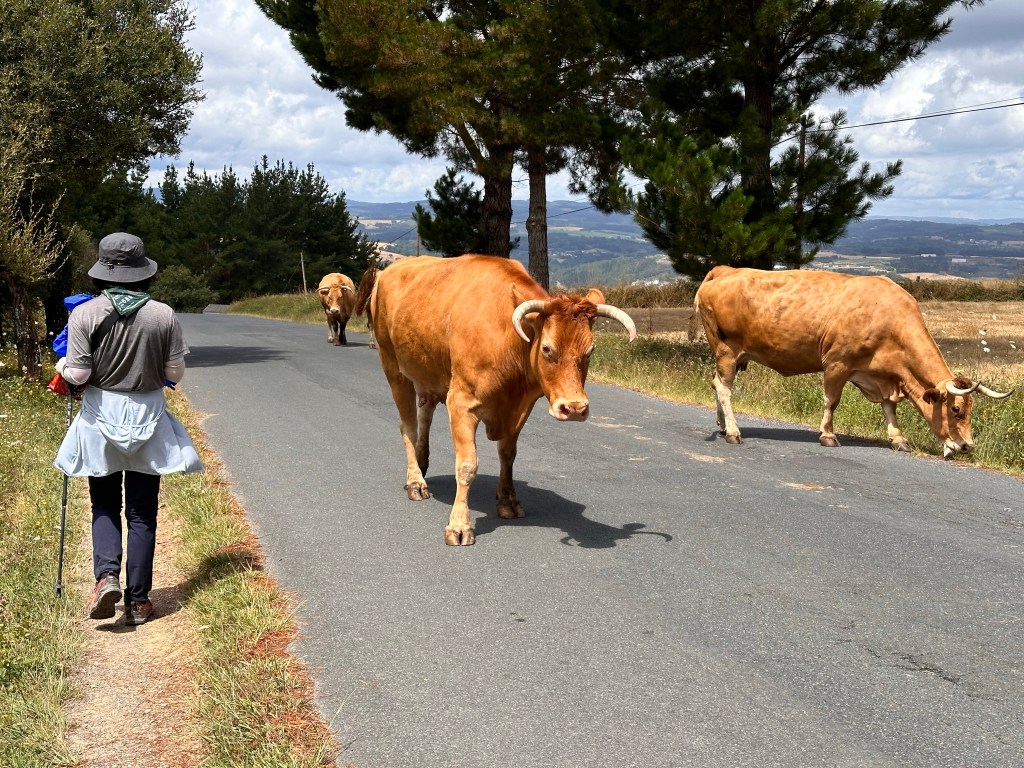
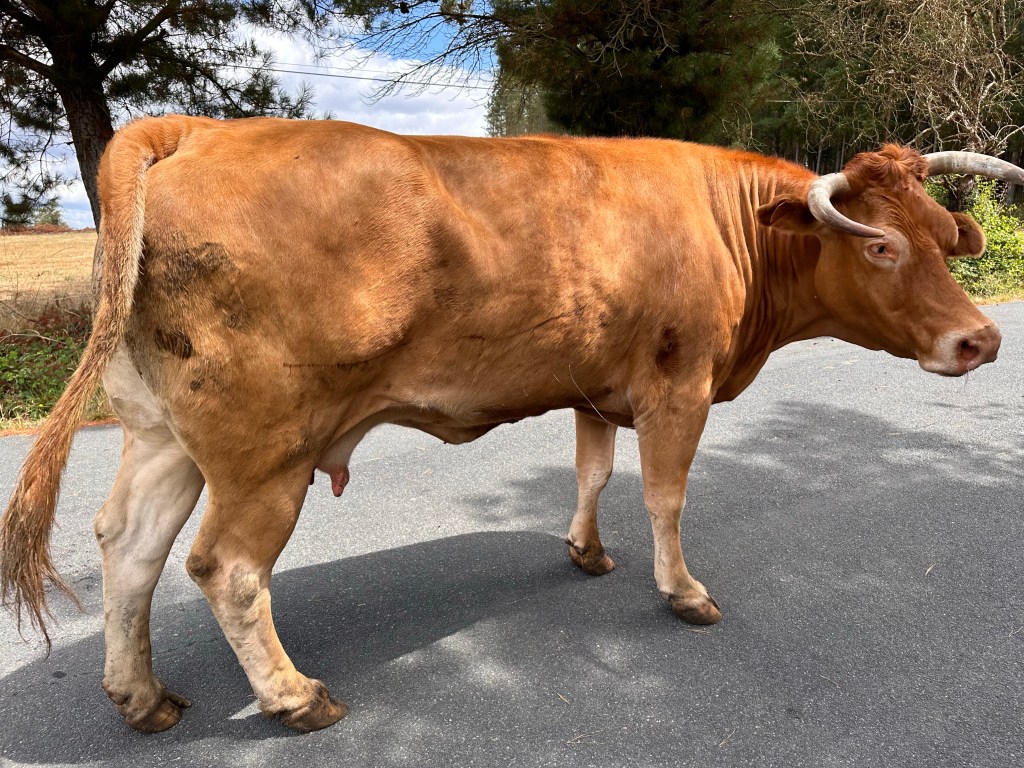
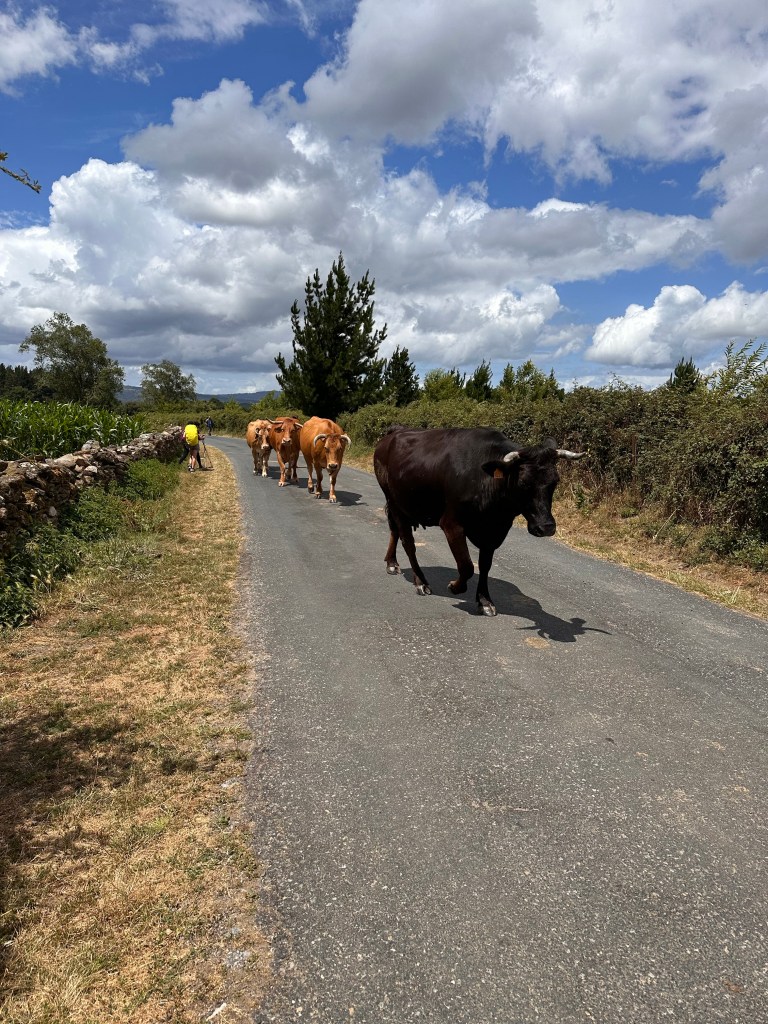
The final few kilometres to Portmarin was punctuated by rather large and quite beautiful cows on the road invariably accompanied by a dog, usually an Alsatian and a grizzled elderly cow herder.
Portomarin was a small village in the 1960s which was drowned on the orders of Franco to create a reservoir. The church and a couple of other important buildings were dismantled stone by stone and rebuilt in the newly cleared forest on the hillside where a new town was constructed. There’s a long bridge across the reservoir which we needed to traverse to get to Portomarin.
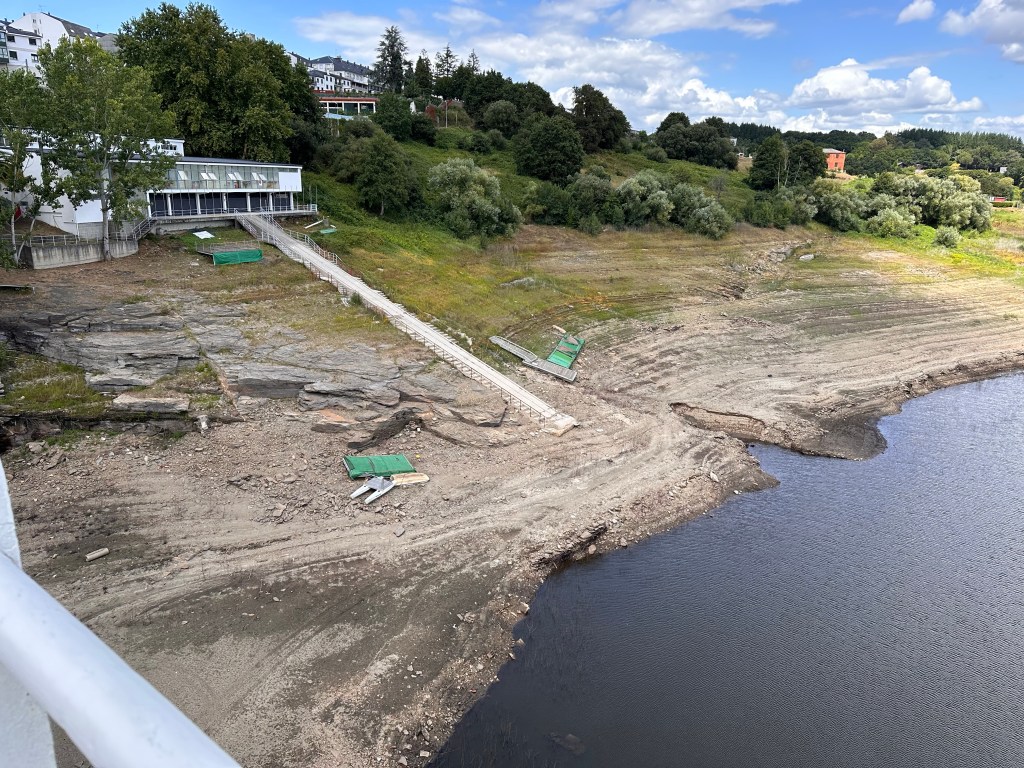
Clearly the water level is very low, the slipway stopping a long way from the water’s edge.
At the end of the bridge are some rather steep steps.

Shortly after the top is this impressive mural.
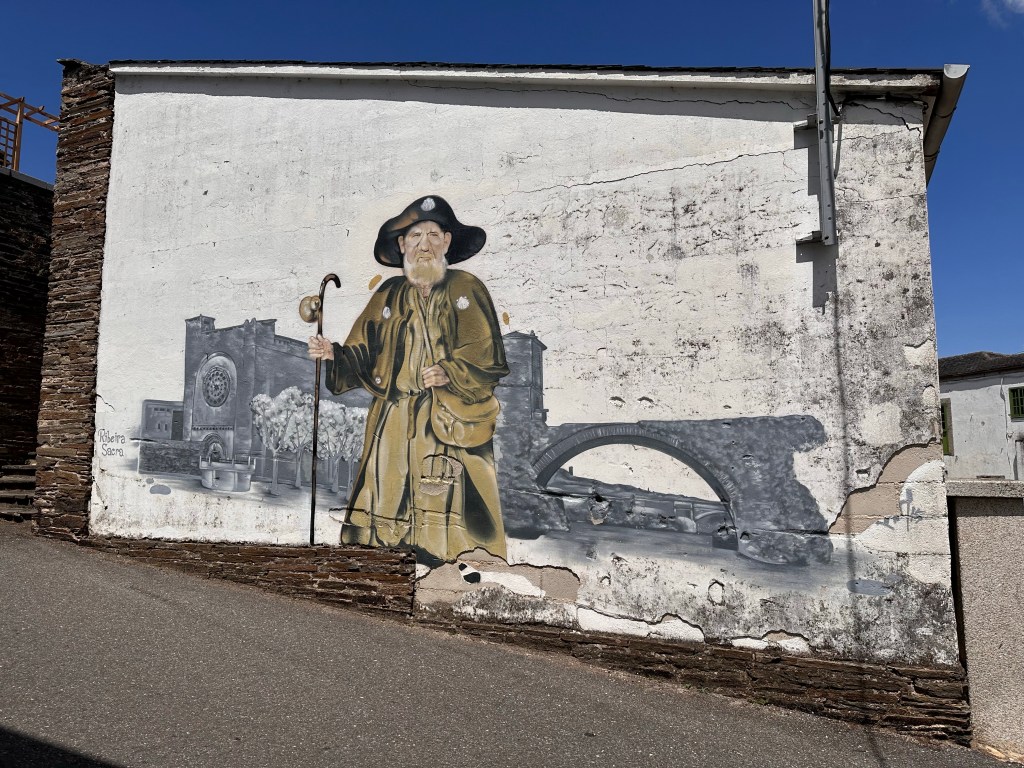
Oddly, early on the walk we passed a Brazilian priest, identical in appearance to this chap if the hat is replaced with a long white ponytail. Clad in simple sandals, he shuffled slowly, dragging his right foot, seemingly in some pain. We passed him, wished him Buen Camino and exchanged a few cheerful words in English before walking on a few kilometres to a small café. Shortly after finishing our coffee he passed us, walking in the same fashion. We overtook him for the second time. I was about to ask if he needed any help when he smiled and wished us well on our camino. Assuming that Portomarin was his destination today, I’ve no doubt that he made it. It’s a little under 90 kilometres left to Santiago and I’m sure that with patience and a little care he’ll arrive safely at the cathedral. I rather suspect that he’s amongst a very small group of true pilgrims on the Camino.
We’re currently ensconced in a lovely light room in a small boutique hostel, an extension of a highly recommended albergue. Dinner has been recommended by the young lady at the desk and we’ll head out shortly. In the meantime Dorothy has slept whilst I’ve watched yet another superb Ben Eater YouTube video on the telly. Ah the benefits of the internet.
Buen camino
Addendum
We ate at the restaurant recommended by the receptionist. It had excellent food, perhaps the best we’ve eaten and great views over the lake. We shuffled there and back without incident though both of us are struggling with painful calves and blistered little toes. Once walking we tend to ‘oil up’ and legs and feet begin responding appropriately to messages from the brain. Unfortunately, until that point we must look like a pair of out of control marionettes. Such are the joys of long distance walking 😞.
 pererindod