
Got up late, packed, wandered down to the central (at the edge of town) bus station, grabbed a coffee.
Jumped on the ALSA bus to Santander, meandered around country lanes taking great care to avoid any road wider than two narrow cars and finally after 19 stops and 2 hours we arrived in Santander.
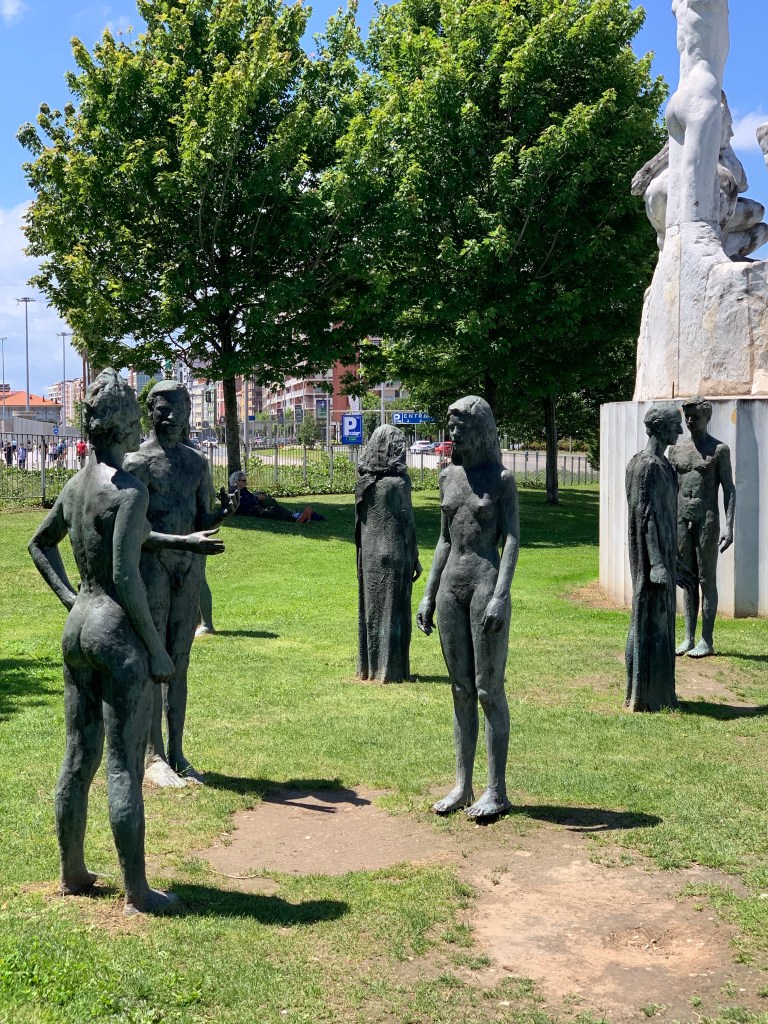
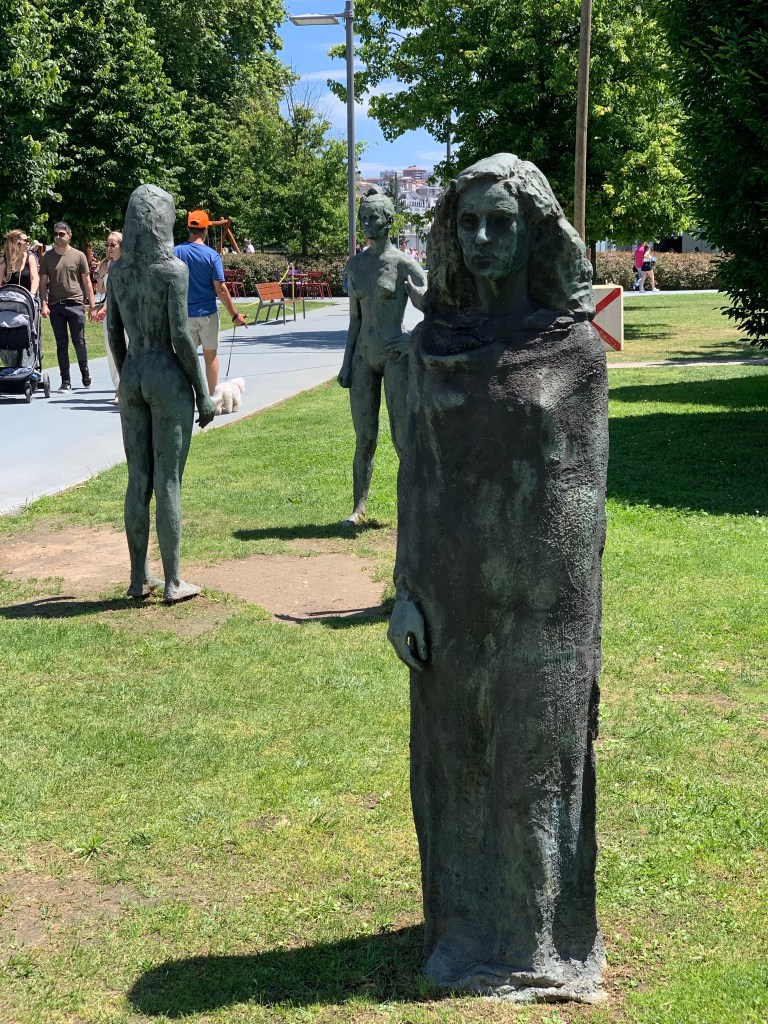

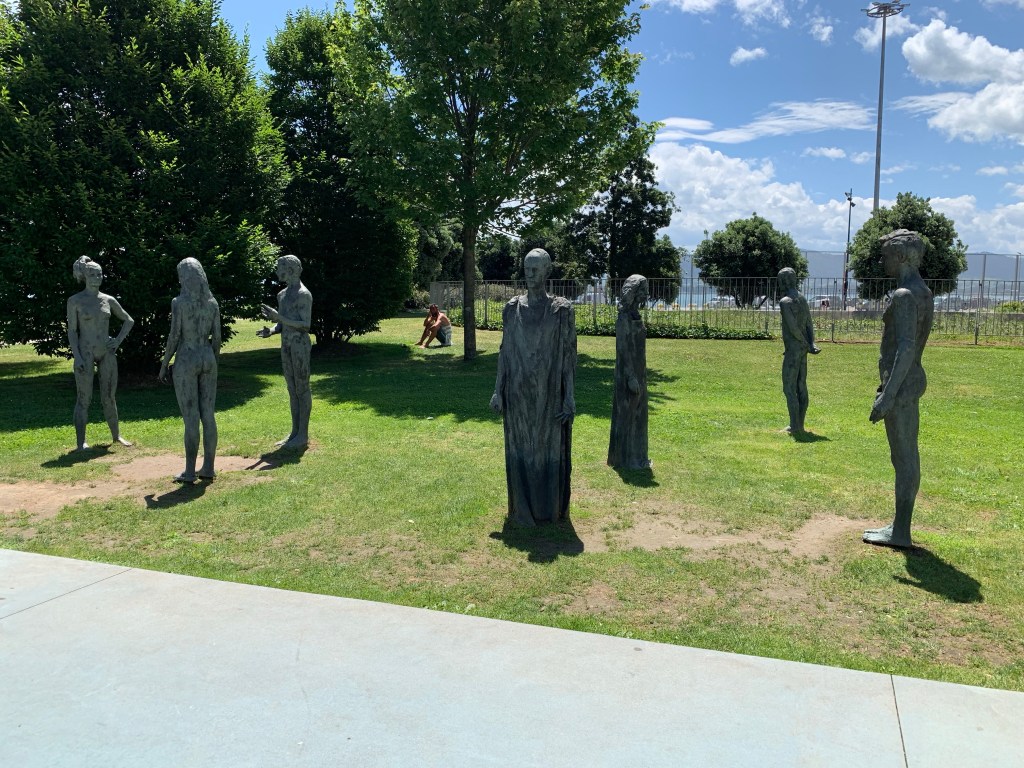
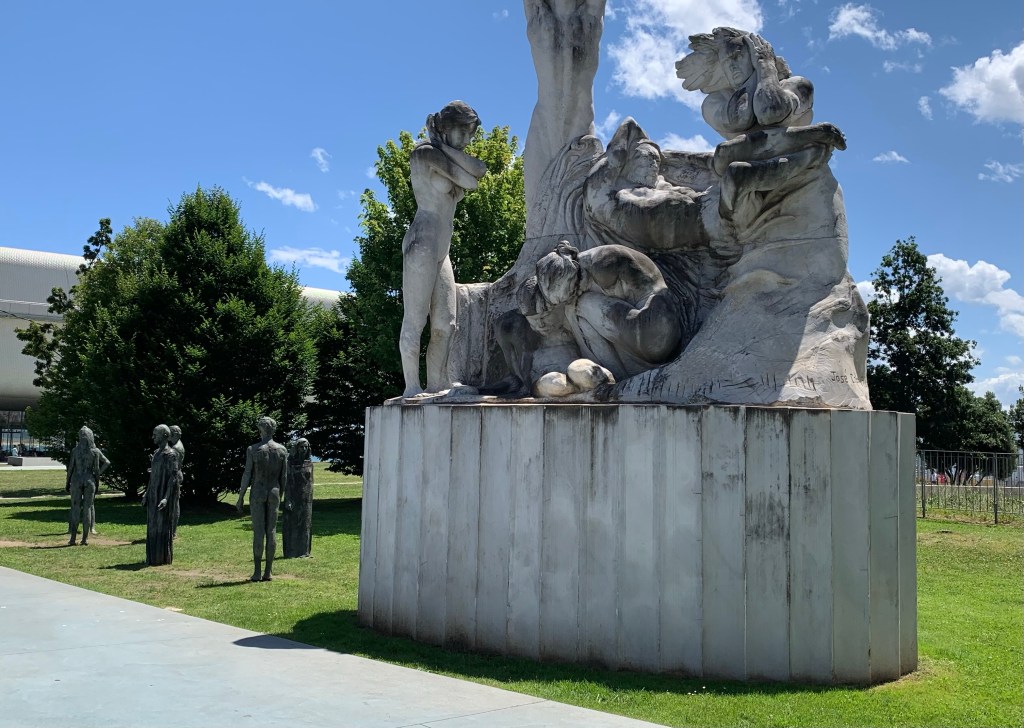
“On February 15, 1941, a big fire burned part of the city of Santander that would change it forever. A fire, struck by an intense south wind, devoured the center of the city, leaving about 10,000 homeless people and 120,000 square meters of ruins and rubble, where up to that time was joined by 90 percent of commercial activity.
In the post-war period following a recent Civil War, the inhabitants of Santander received solidarity, not only from the emergency forces of their city and many others who came to help them, but also from different entities and a multitude of individuals. Donations of clothing, food and money came from all parts of an impoverished Spain. And also from abroad.
Seventy-five years later, the city commemorates this event with the aim of paying homage to the victims and the people and institutions that helped them. As well as to recover for the future the living memory of the Fire. Commemorating fires that have caused so much damage in the city can help preventing possible future fires.”
Unfortunately, this story is only too relevant to what is now happening in Spain. Navarre, the region of Spain which holds as its capital, Pamplona, of bull running fame and our third stop on the Camino Frances is now closed to pilgrims. Fires are threatening many of the villages we passed through recently including the famous Roman bridge at Puente la Reina and Los Arcos from which Dorothy et Al notoriously took a taxi to Torres del Río. The recent vicious temperatures have made their mark, killing many young swifts and martins and drying the countryside to a tinder like state. Thankfully temperatures have now fallen but these regions need rain to save crops and to protect flora and fauna. The air is dry, heavy with pollution, making throats sore and exertion difficult.
 pererindod